
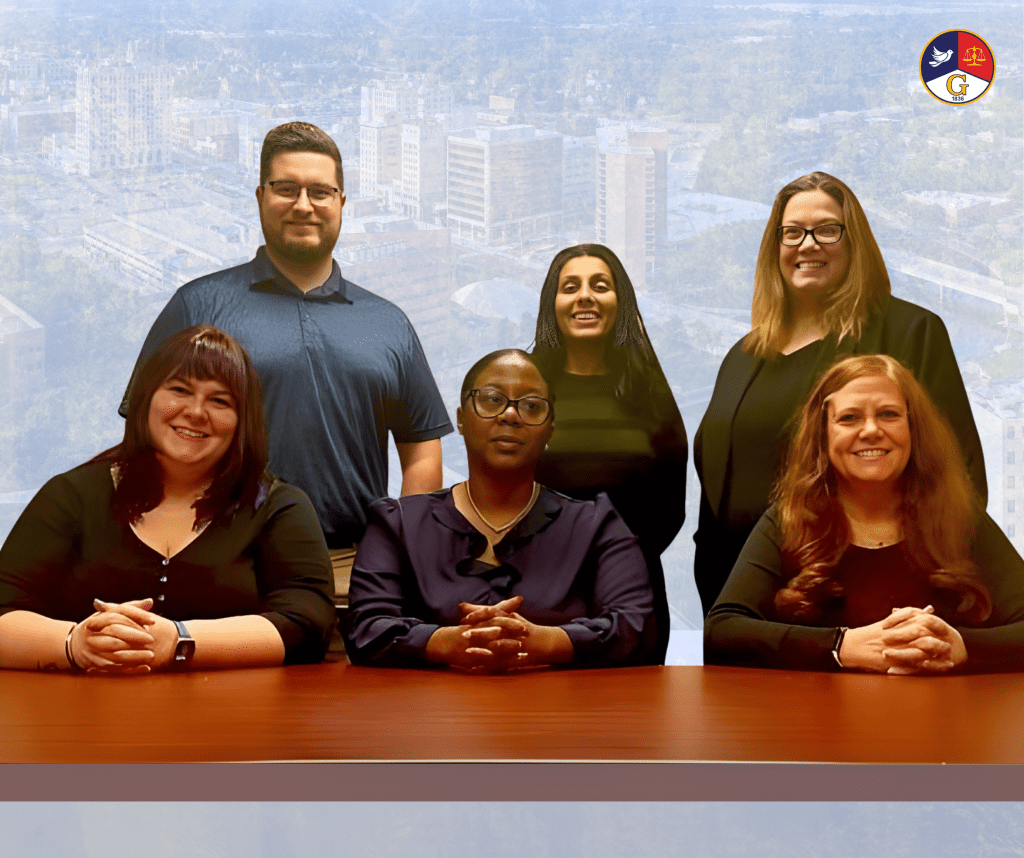
Beyond the Desk is a publication of Genesee County’s Department of Human Resources and Labor Relations and our incredible HR Representatives, Cindy Pendergrass and Jasmine Barksdale.
If you’ve ever wondered what it looks like when a justice system focuses on accountability and opportunity, the work of Genesee County’s Community Engagement and Justice Services (CEJS) is a strong example. Formerly known as Community Corrections, the department has embraced a new name and a clearer public-facing mission to move beyond the stigma often attached to the word “corrections” and better reflect what the team actually does: help people build pathways to growth, stability, and reintegration.
The department’s guiding philosophy is simple and powerful: “meeting humans where they’re at.” CEJS often refers to the people they serve as “our humans,” a phrase that reflects compassion, dignity, and an unwavering belief that change is possible.
What CEJS Does for Our Community
CEJS supports public safety by helping people navigate critical moments, before trial, during incarceration, and upon re-entry, while connecting them to services that reduce risk and build stability. The department’s work includes:
- Pre-Trial Services
- Re-Entry Services
- Jail MAT (Medication-Assisted Treatment)
- Specialty Courts
- Opioid Settlement Coordination
These initiatives don’t just serve individuals; they also support the broader community by strengthening reintegration, reducing repeat offenses, and connecting residents to treatment, education, and vocational pathways.
Pre-Trial Services: Smart, Individualized Decisions Up Front
CEJS Pre-Trial Services conducts detailed evaluations prior to felony arraignments to assist the court in making informed decisions. These assessments can include bond-related factors such as background, family circumstances, risk scores, offense type, and potential housing arrangements if the person is released. For those who can’t meet financial requirements, Pre-Trial Services may recommend alternatives such as supervised release, electronic monitoring, or residential treatment when higher levels of supervision are needed.
This work helps promote fairness, supports judicial decision-making, and can reduce unnecessary jail crowding and related costs.
Re-Entry Services: Planning for Success Before Release
Re-entry doesn’t start on release day. CEJS Re-Entry Services focuses on building individualized transition plans for people scheduled to be released from the Genesee County Jail within six months. This proactive approach helps address barriers early—so residents returning home are more likely to stabilize, reconnect with supports, and avoid cycling back into the system.
The Human Side of the Work
CEJS staff are often the first supportive connection a person has outside the jail setting, especially for individuals who are frightened, experiencing withdrawal, living with mental health needs, or simply unsure where to begin.
As one CEJS Social Service Worker, Nathan Angliss, explains, these moments can change the trajectory of someone’s case, or their entire life, simply by listening and connecting them to the right help.
R.I.S.E.: A Collaborative Model That Wraps Services Around People
A key component aligning CEJS efforts is R.I.S.E. (Reach, Inspire, Serve, Empower)—a collaborative initiative between the Greater Flint Health Coalition, the Genesee County Sheriff’s Office, and community partners. R.I.S.E. provides comprehensive support addressing mental health, substance use, and other health-related social needs, both during incarceration and after release.
Services include:
- Peer recovery coaching
- Parenting education
- Family support services
- Connections to behavioral health and community-based supports
The goal is clear: reduce recidivism and improve health and stability for individuals and families impacted by incarceration.
Addressing the Opioid Crisis: Coordinating the Opioid Settlement Fund
CEJS also plays an important role in monitoring and coordinating the Opioid Settlement Fund, as advised by the Genesee County Board of Commissioners. Genesee County is identified as highly vulnerable to substance use impacts, with an overdose fatality rate cited at 50 deaths per 100,000 residents, and the County is projected to receive approximately $18 million over 18 years through opioid litigation settlements (with about $6.5 million already received at the time of this report).
Those funds are being directed into evidence-based strategies, including:
Jail MAT (Medication-Assisted Treatment)
The Jail MAT program supports individuals with opioid use disorder by initiating treatment for newly incarcerated residents and allowing them to continue treatment while in custody. Under R.I.S.E. guidance, the program supports safe detoxification and recovery stabilization. It is supported by a grant from the Michigan State Police and operates in partnership with New Paths.
Specialty Courts and Recovery Support
Opioid settlement funding has also been used to support specialty-court recovery efforts, including resources connected to Adult Felony Recovery Court (often referred to as Drug Court). Specialty Courts offer structured supervision and regular court monitoring while supporting treatment and recovery—creating a pathway that emphasizes sobriety, personal accountability, and reduced recidivism rather than defaulting to incarceration alone.
As Tiffany Jones, Community Corrections Coordinator, notes in the report, this work is about building a stronger community by bringing departments and stakeholders together to share resources and support justice-impacted individuals and their families.
A Modern Approach: From Punishment to Recovery and Reintegration
CEJS recognizes that many people struggling with substance use or mental health challenges can feel isolated, stigmatized, and hopeless. The department’s approach emphasizes empathy, awareness, and outreach—helping the community better understand the realities of these challenges and building a more humane, supportive path toward healing.
Need Help? You’re Not Alone.
If you or someone you care about is struggling with mental health or substance use, support is available through national and local resources—including the 988 Suicide and Crisis Lifeline and SAMHSA’s National Helpline.


 1836 Place
Leave a comment